How to Solve & Prevent AdBlue® Crystallisation
1) Fix what you see (restore flow & spray)
- Clean/replace injector if spray is distorted or tip is crusted. Use OEM‑approved cleaner.
- Replace DEF filter and inspect lines for kinks/restrictions.
- Verify pump pressure and purge/after‑run operation.
2) Correct the controls
- Update ECU/SCR software to latest calibration.
- Ensure dosing is temperature‑gated; confirm thresholds during a road test.
- Re‑learn/adaptations after component changes.
3) Validate the sensors
- Check upstream/downstream NOx sensors.
- Verify exhaust temperature sensors and ambient readings.
- Fix exhaust leaks upstream of the SCR.
4) Use the right fluid & handle it correctly
- Buy ISO 22241‑certified AdBlue®.
- Store cool and shaded; avoid >30 °C or direct sun.
- Rotate stock (first‑in, first‑out).
- Don’t mix with water or non‑spec fluids.
5) Driving & operating practices
- Minimise repeated short, cold trips.
- Avoid extended idling that never warms the system.
- Don’t switch off immediately after dosing; allow the after‑run purge to finish.
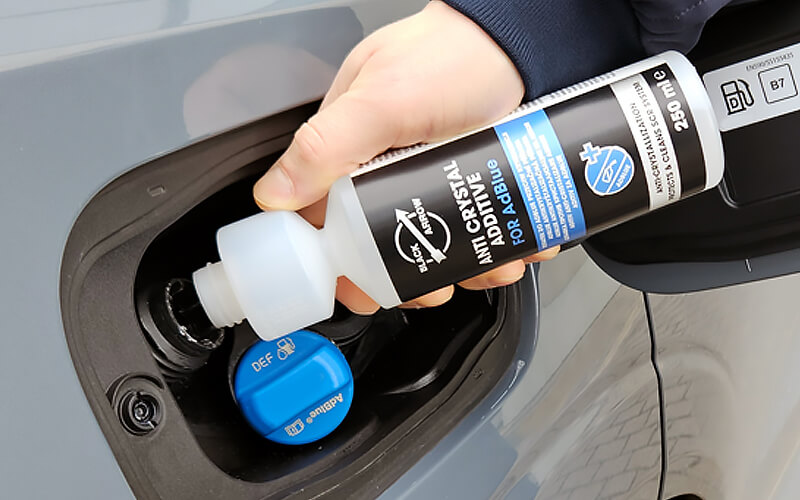
6) About crystallisation suppressant additives
- Some fleets test additives that lower deposit formation. Use only if OEM‑tested.
- Poorly validated additives can introduce contaminants and void warranties.
Recommended fleet maintenance rhythm
- Every 20–40k km (or per OEM): DEF filter change; injector spray/flow test.
- Quarterly: Visual inspection for crystals/leaks; confirm purge operation.
- At each delivery: DEF quality spot‑check.
- Annually: Software level check; NOx and temp sensor health check.
Simple runbook
- Read/record codes; clear.
- Inspect injector/mixer; clean or replace.
- Replace DEF filter; pressure & purge test.
- Confirm temp gating and ECU/SCR calibration.
- Road‑test to operating temp; verify NOx conversion.
- Log findings; schedule next checks.
FAQs
Does crystallisation damage the SCR catalyst?
Heavy deposits can restrict flow and reduce mixing; if left long enough they may overheat components.
Can I dissolve crystals with water?
Small external crystals can be rinsed with deionised water. Don’t flush lines with tap water.
What shelf life does AdBlue have?
Up to 12 months when stored sealed and cool.
Will higher dosing “burn off” deposits?
No. Over‑dosing usually worsens deposits.
Key Takeaway
AdBlue crystallisation happens for a few main reasons: temperature extremes, poor-quality or contaminated fluid, ECU calibration issues, and storage or handling mistakes.
The good news is that it can be prevented. By using certified AdBlue, keeping the SCR system properly configured, storing and handling fluid correctly, and sticking to regular maintenance, drivers and fleet managers can avoid costly repairs and keep their vehicles performing reliably while meeting emissions standards.
Related reading: AdBlue® Crystallisation: Causes & Effects | SCR System Guide | AdBlue® FAQ Malaysia
Need ISO 22241-Certified AdBlue® in Malaysia?
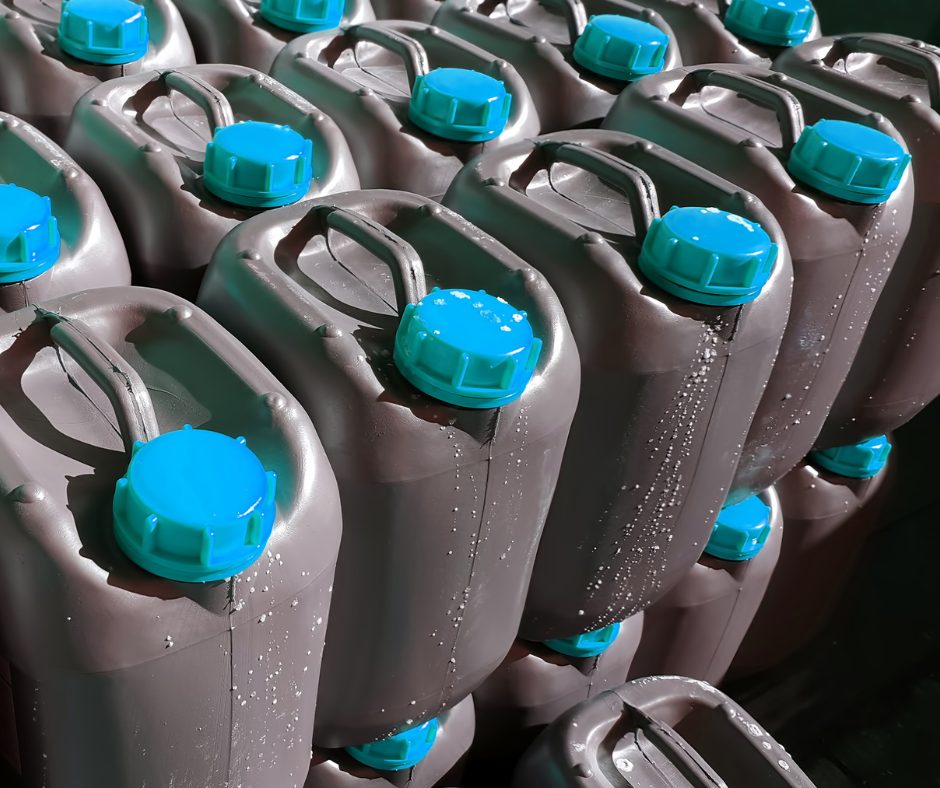
Protect your SCR system with quality-guaranteed AceRev AdBlue® — available in 10L, 20L, 200L drums, 1000L IBCs, and bulk tanker delivery.
View Packaging Options Find a Supplier