What You’ll Learn in This Guide
- What AdBlue® is and why Malaysian diesel vehicles need it
- How SCR systems work and which vehicles require AdBlue®
- Correct storage and handling in Malaysia’s tropical climate
- Consumption rates and when to top up
- Where to buy certified AdBlue® across Malaysia
- Regulatory compliance — Euro 4M, Euro 5, and JPJ requirements
What is AdBlue®?
AdBlue® is a diesel exhaust fluid (DEF) made from a precise mixture of 32.5% high-purity urea and 67.5% deionised water. It is injected into the exhaust system of diesel vehicles equipped with Selective Catalytic Reduction (SCR) technology to reduce harmful nitrogen oxide (NOx) emissions by up to 90%.
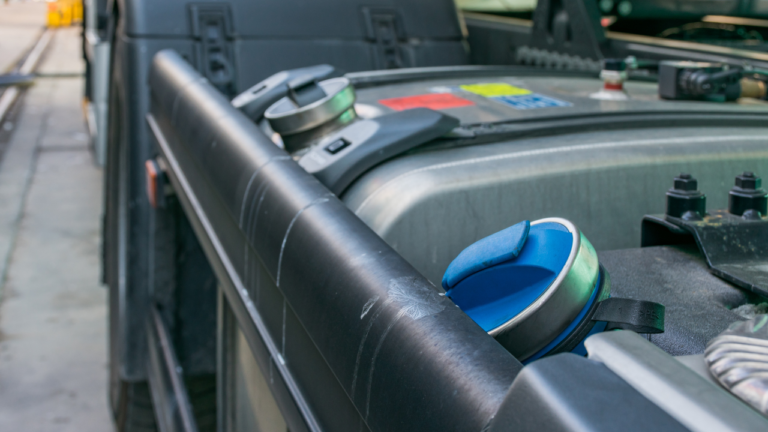
AdBlue® is not a fuel additive — it goes into a separate tank (usually with a blue filler cap) and is consumed independently of diesel. It is required by law on all SCR-equipped vehicles, and running out will cause your vehicle to enter limp mode and eventually stop starting.
Important: AdBlue® is the registered trademark of the German Association of the Automobile Industry (VDA) for AUS 32 (Aqueous Urea Solution). In Malaysia, the product is also referred to as DEF (Diesel Exhaust Fluid). Only ISO 22241-certified products should be used.
Why Malaysia’s Diesel Fleets Need AdBlue®
Malaysia implemented Euro 4M fuel standards for Peninsular Malaysia in 2020, and Euro 5 rollout is progressing. Euro 4M and Euro 5 diesel vehicles — trucks, buses, vans, and passenger SUVs — overwhelmingly use SCR exhaust technology to meet NOx emission limits, which means they consume AdBlue®.
The consequences of running without AdBlue® are serious:
- Reduced engine power (limp mode) triggered automatically by the vehicle’s ECU
- Vehicle refuses to restart after stopping once AdBlue® is empty
- JPJ enforcement — emission non-compliance can result in fines and failed roadworthiness inspections
- SCR catalyst damage if the system runs dry or is filled with contaminated fluid
Which Vehicles in Malaysia Require AdBlue®?
| Vehicle Category | Common Makes | AdBlue® Required? |
|---|---|---|
| Heavy trucks (Euro 4/5/6) | Volvo, Scania, MAN, Mercedes Actros, Hino, Isuzu | Yes |
| Buses & coaches | Most Euro 4M and above city/express buses | Yes |
| Light commercial vans | Mercedes Sprinter, VW Crafter, Mitsubishi Fuso Canter (select) | Yes |
| Diesel passenger cars/SUVs | Mercedes-Benz BlueTEC, VW TDI, BMW xDrive diesel, Volvo D-series | Yes |
| Construction equipment | Komatsu, Caterpillar, Hitachi (Stage IV/V engines) | Yes |
| Euro 3 and older diesel | Most pre-2010 vehicles | No |
| Petrol / hybrid vehicles | All | No |
If unsure, check your vehicle’s engine compartment sticker, owner’s manual, or look for the blue AdBlue® filler cap (usually separate from the diesel filler).
How Much AdBlue® Does My Vehicle Use?
AdBlue® consumption is typically 3–7% of diesel consumption, varying by engine load, driving pattern, and ambient temperature.
| Vehicle Type | AdBlue® Use (per 100km) | Recommended Top-Up Interval |
|---|---|---|
| Heavy-duty truck (laden) | 1.5 – 3.5 litres | Every 2,000 – 3,000 km |
| Light commercial van | 0.4 – 1.0 litres | Every 5,000 – 8,000 km |
| Diesel passenger car/SUV | 0.3 – 0.8 litres | Every 10,000 – 15,000 km or at service |
| Bus / express coach | 1.2 – 2.8 litres | Every 2,500 – 4,000 km |
For fleet management, monitor AdBlue® consumption the same way you track fuel — unexpected increases can signal SCR system faults or dosing unit issues.
AdBlue® Storage in Malaysia’s Tropical Climate
Malaysia’s heat and humidity are the two biggest threats to AdBlue® quality. Follow these guidelines to preserve shelf life:
- Temperature: Store below 35°C. Extended heat above 35°C accelerates urea decomposition. Avoid direct sunlight on containers.
- Shade & ventilation: Store in a covered, ventilated area — not inside a hot shipping container or under a corrugated metal roof without insulation.
- Sealed containers: Keep caps tightly sealed at all times. AdBlue® absorbs CO₂ from air, which can lower pH and degrade quality.
- No metal contact: Avoid storing or transferring AdBlue® in uncoated steel or copper containers — use HDPE plastic, stainless steel (316L), or polypropylene equipment only.
- Shelf life: 12–18 months when stored correctly. Check expiry dates on all packaging before use.
- Avoid contamination: Never use diesel-contaminated pumps or jerry cans for AdBlue®. Even trace diesel will damage the SCR catalyst.
Never use: Water, mineral water, RO water, urine, fertiliser solution, or uncertified urea products in an AdBlue® tank. This will cause irreparable SCR catalyst damage costing RM 10,000–50,000+ to repair.
How to Buy AdBlue® in Malaysia
AdBlue® is available through several channels in Malaysia. For fleet operators, certified distributors offer the most reliable quality assurance and volume options:
Certified Distributors (Recommended for Fleets)
- AceRev AdBlue® by Interion — ISO 22241-certified, available in 10L, 20L, 200L drums, 1000L IBCs, and bulk tanker. Ships to West Malaysia, Sabah, Sarawak, and Labuan.
- BlueDiesel Sdn Bhd — West Malaysia distributor
- Tenton (RiN AdBlue) — Selected distribution points
Petrol Station Options (Top-Up Only)
- Petron stations — Selected locations offer AdBlue® dispensing
- Caltex stations — Selected locations, primarily for trucks
East Malaysia (Sabah & Sarawak)
AdBlue® availability is more limited in East Malaysia but is growing. AceRev AdBlue® by Interion ships nationwide. Local distributors operate in Kuching and Kota Kinabalu. See our full supplier directory for current listings.
Online (for Smaller Quantities)
10L and 20L AdBlue® is available on Shopee and Lazada Malaysia for smaller users, though price per litre is higher than bulk purchasing.
AdBlue® Quality: What to Check Before Buying
Not all AdBlue® products on the Malaysian market are equal. Always verify:
- ✅ ISO 22241 certification — look for the VDA or ISO mark on packaging
- ✅ Urea concentration: 32.5% ± 0.7% — on the product label or quality certificate
- ✅ Expiry date — check before every purchase, especially for bulk orders
- ✅ Sealed, original packaging — do not buy unsealed or repackaged AdBlue®
- ✅ Proper colour: AdBlue® should be clear/colourless. Yellow or blue tinting indicates contamination
Fleet Management: AdBlue® Best Practices
For Fleet Managers
- Track AdBlue® consumption per vehicle alongside fuel — sudden changes signal SCR faults
- Set a minimum stock level (e.g., 30-day supply on hand) to avoid urgent sourcing
- Maintain a dedicated AdBlue® dispensing pump at your depot — use HDPE tanks, not steel
- Train drivers to identify AdBlue® warning lights and when to top up
- Include AdBlue® checks in every pre-trip inspection
- Negotiate bulk pricing with certified distributors — cost per litre drops significantly at 1000L+ orders
For Drivers
- Never ignore the AdBlue® low warning light — top up at the nearest opportunity
- Do not confuse the AdBlue® filler (blue cap) with the diesel filler
- If you accidentally fill diesel into the AdBlue® tank — stop immediately, do not drive, drain and flush the tank
- Keep a 10L or 20L jug of AdBlue® in the vehicle for emergencies on long hauls
Get AdBlue® Delivered to Your Fleet
ISO 22241-certified AceRev AdBlue® — available in 10L jugs through 1000L IBCs and bulk tanker. Malaysia-wide delivery.
View Packaging Options Find a Supplier Near YouRelated guides: How SCR Systems Work | AdBlue® Crystallisation: Causes & Effects | How to Prevent Crystallisation | AdBlue® FAQ